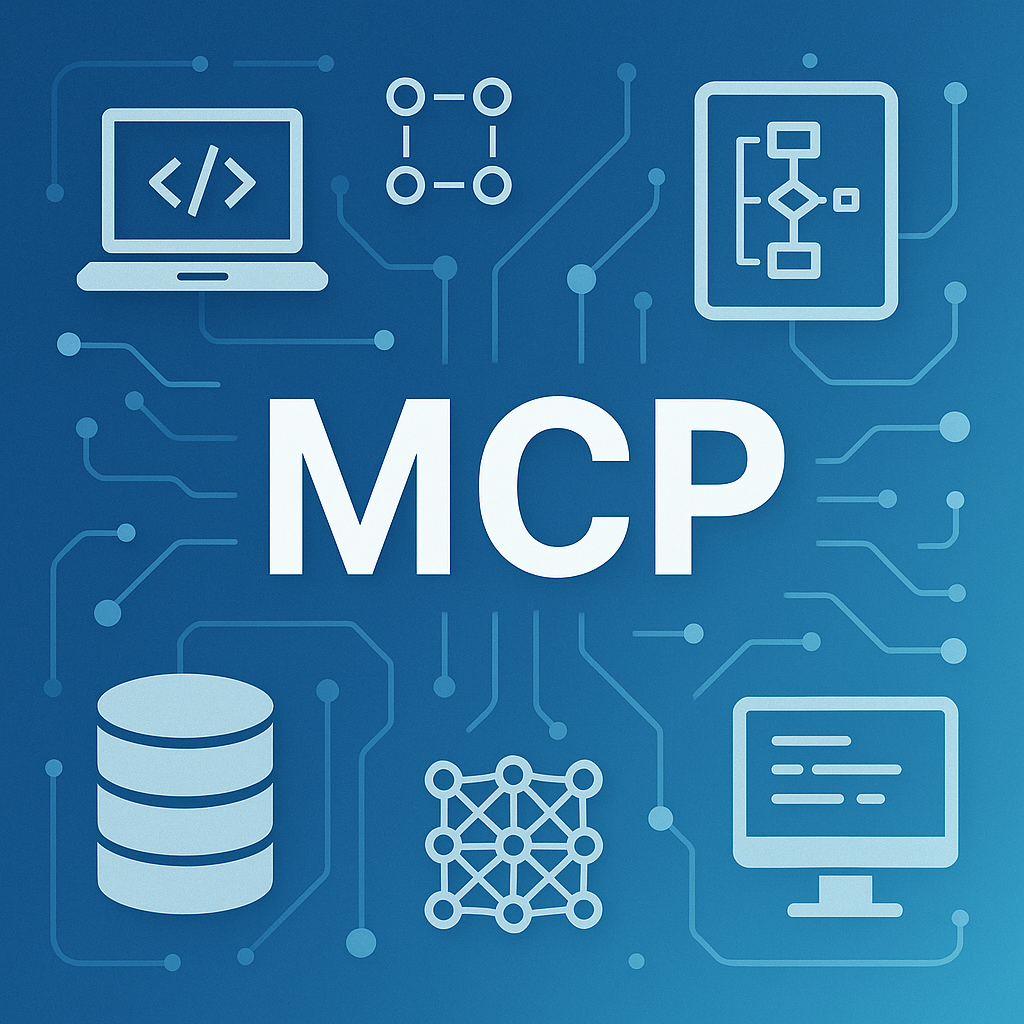
The rapid evolution of artificial intelligence necessitates the development of robust frameworks that facilitate seamless interaction among autonomous agents. A leading paradigm in this realm is the the the Model Context Protocol (MCP), which lays a foundation for efficient multi-agent systems. Through standardized interfaces, distributed memory layers, and advanced communication protocols, the Model Context Protocol MCP enhances the efficiency of autonomous AI architectures.
Understanding the Model Context Protocol MCP
The Model Context Protocol MCP serves as a standardized tool interface tailored for autonomous multi-agent systems. By defining a coherent structure for communication among agents, MCP addresses the challenges posed by heterogeneous environments. This framework emphasizes a fundamental abstraction, allowing different agents to exchange context-sensitive information effectively.
One of the significant advantages of using the Model Context Protocol MCP is its ability to unite disparate AI models under a singular operational framework. This enables various agents, regardless of their underlying technology or architecture, to operate collaboratively. The result is a more cohesive and efficient functioning of multi-agent systems, which is critical in applications ranging from robotics to data analysis.
Architecturally, the Model Context Protocol MCP provides a blueprint that standardizes the interactions between agents. This leads to a reduction in the development overhead typically associated with adapting AI models for interoperability. Engineers can focus on enhancing the capabilities of individual agents without being bogged down by integration issues.
Core Features and Benefits of Model Context Protocol MCP
The features of the Model Context Protocol MCP play a pivotal role in its functionality and performance. First, it introduces a standardized tool interface that supports various AI models. This compatibility ensures that engineers can work with diverse frameworks without excessive friction. In practical terms, this means reduced redundancy when coding and testing different AI modules.
Another prominent aspect of MCP is its distributed memory layers. These layers allow agents to share relevant data and context efficiently. By implementing distributed memory, agents can access and update shared knowledge bases without significant lag, which is vital for real-time applications. This leads directly to the next point: the protocol supports async client-host handshakes, ensuring smooth and efficient communication among agents even in complex, high-load scenarios.
The Model Context Protocol MCP also emphasizes performance, showcasing sub-150ms token latency benchmarks. This low-latency capability ensures that the communication overhead does not become a bottleneck, particularly in systems requiring real-time responsiveness. In autonomous vehicle systems, where split-second decisions can be a matter of safety, such benchmarks are not just desirable; they are essential.
Implementation Strategies for Model Context Protocol MCP
– Implementing the Model Context Protocol MCP within an enterprise solution requires strategic planning. First, organizations need to assess their current AI deployments and identify areas where multi-agent interactions are necessary. This assessment will guide the adaptation of the MCP framework to existing architectures.
Once identified, teams can leverage the standardized tool interface to begin the integration process. Engineers should ensure that their agents are designed with MCP compatibility in mind. This involves creating modular components that can easily communicate through the MCP’s defined protocols. Each agent must be configured to handle its local context while being able to share relevant information asynchronously with others.
Additionally, organizations should invest in robust testing frameworks to simulate agent interactions governed by the Model Context Protocol MCP. This testing phase is crucial to ensure that latency benchmarks are consistently met and that agents can effectively manage data sharing across distributed memory layers.
Real-World Applications of Model Context Protocol MCP
The real-world implications of adopting the Model Context Protocol MCP are vast, covering industries such as healthcare, transportation, and logistics. In healthcare, for example, autonomous agents can collaborate to supply contextual information from different data sources to assist medical decision-making. Here, the sub-150ms latency becomes vital for timely interventions.
In the transportation sector, integrating MCP can enhance the functionality of autonomous vehicles. When multiple vehicles communicate contextually, they can coordinate movements to optimize traffic flow and reduce accidents. This is facilitated by the standardized communication protocols set out by the Model Context Protocol MCP.
Logistics also stands to gain significantly, as autonomous agents manage supply chain operations with high efficacy. By utilizing distributed memory layers, agents tracking inventory levels can instantly share data updates, ensuring that stock levels are accurately reflected in real-time systems.
Comparative Analysis of Multi-Agent Systems with and without MCP
| Feature | With Model Context Protocol MCP | Without Model Context Protocol MCP |
|---|---|---|
| Standardized Tool Interface | Yes | No |
| Distributed Memory Layers | Yes | No |
| Async Client-Host Handshake | Yes | Limited |
| Token Latency | Sub-150ms | Variable |
| Interoperability of Agents | High | Low |
This comparative analysis clearly illustrates the advantages of implementing the Model Context Protocol MCP within multi-agent systems. The standardization, enhanced communication, and performance improvements directly contribute to creating more resilient and responsive AI architectures.
The future of AI lies in collaborative frameworks, and the Model Context Protocol MCP is at the forefront of this transformation. As organizations increasingly shift towards integrated solutions, adopting the MCP framework offers a blueprint for success in developing sophisticated autonomous agents that can work harmoniously.
To fully leverage these advancements in AI architecture, consider integrating the Aylence AI Suite into your solutions. With its user-friendly interface and comprehensive tools tailored for the Model Context Protocol MCP, Aylence AI Suite empowers engineers and architects to build scalable, efficient, and innovative multi-agent systems.